Welcome to Our Exciting and Unique Exhibits
Enter the Museum by way of the Rotunda in its south wing where the portraits of Walter E. Foran and Dr. Wabun C. Krueger are prominently displayed. Walter F. Foran, a Hunterdon County State Senator, helped secure funding for the Museum and was instrumental in making the dream of an agricultural museum for the Garden State become a reality in 1990. Dr. Wabun C. Krueger was, for over 40 years, the Museum's curator and individual collector responsible for most of the historical agricultural implements that make up the Museum's extraordinary collection.
Also in the Rotunda is a special exhibit, changed seasonally, of a new and fascinating object not previously displayed in the Museum. From the Rotunda take either the elevator or the stairs to the second floor where the exhibits begin.
Jersey Fresh From the Field
On the second floor of the Museum's south wing is the exhibition: Jersey Fresh From the Field which focuses on the six most economically significant crops in the State: apples, cranberries, blueberries, tomatoes, corn and potatoes, as well as a display about packing crops for market.
Featured Artifacts
- Apple Picking Scoop, 1920
- Three Legged Picking Ladder from Jersey Jerry Orchards, 1930
- Cranberry Cleaner and Separator manufactured by John Buzby, 1870
- Hand powered seed planter, 1850
- Two Row Seed Planter, 1850
- Hoover Seated Potato Seed Cutter manufactured by John Deer, 1920
- Horse Drawn Potato Digger manufactured by A.B. Farquhar, 1900
🐝 Giant Observation Beehive
On display between the cranberry and blueberry portions of this exhibition is the Museum's live colony of honeybees in the Giant Observation Beehive - the largest in the Northeast! It was intentionally placed between cranberries and blueberries because these crops depend upon the honeybee for pollination. Also on display are historical artifacts associated with beekeepers and the beekeeping industry.
Historical Shops & Stores
Horse Collar Shop
Continuing on the second floor of the south wing, find a full scale, almost complete, Horse Collar Shop with a handmade iron weathervane from 1860.
Tin Shop
Adjacent is the Tin Shop which exemplifies E.B. White's quote that "Farming is about 20% agriculture and 80% mending something that got busted." Spend time looking at the extensive collection of tools such as the oak turning lathe, the hand made drill press, a foot powered table saw, in addition to just about everything else used by carpenters in early America.
General Store
To the left, tucked into the corner, is one of the Museum's treasures - a fully stocked General Store, filled with everything one could possibly need and want in early America. Next to it is a broom-making machine and sometimes on sunny days it is brought outside for a live demonstration of this craft.
Historical Plows
Exhibited on the balcony that spans the two wings of the Museum is an exhibition of Historical Plows, among which is a noteworthy historical artifact - the Deats Plow, patented in 1828 by John Deats, grandfather of the donor.
North Wing Gallery
Next walk into our largest gallery in the North Wing where some of the Museum's largest historical artifacts are displayed. You cannot miss the:
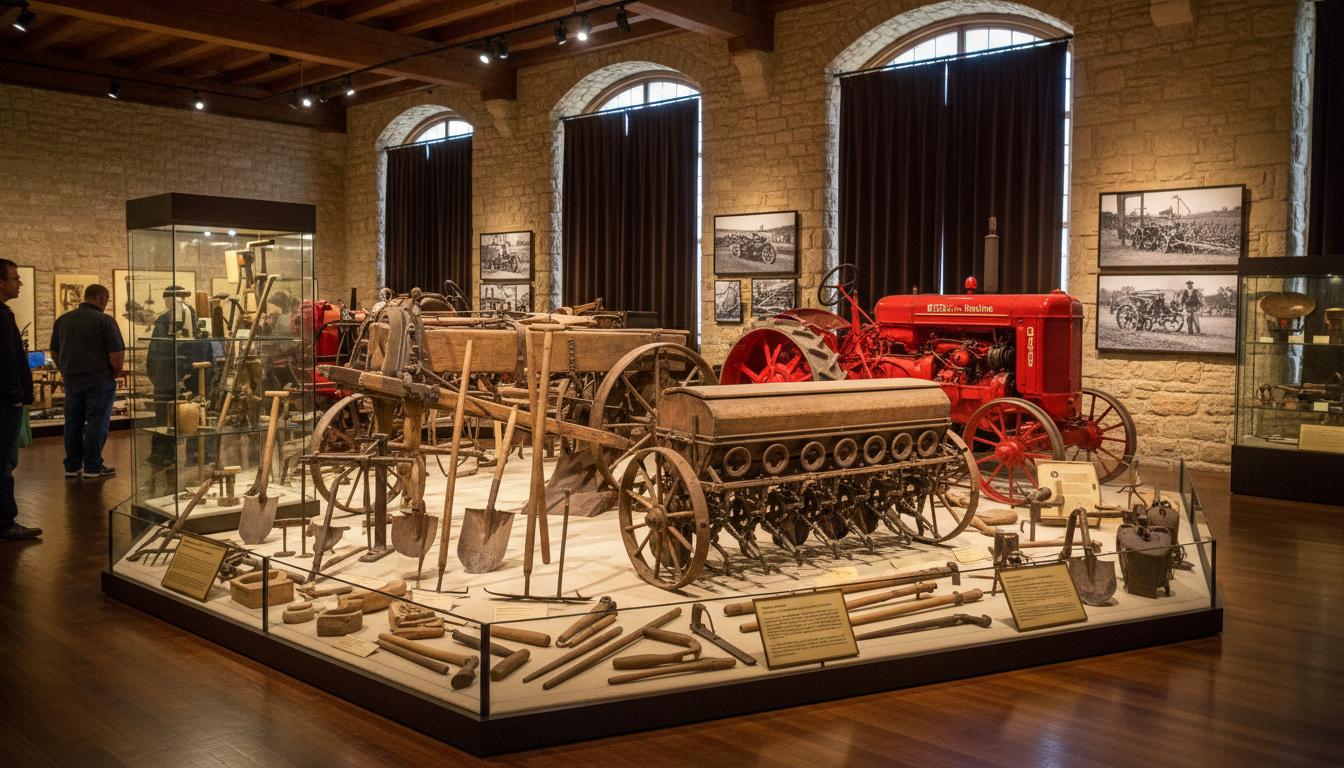
- Fanning Mill, manufactured by M. Campbell, Detroit, MI ca 1899
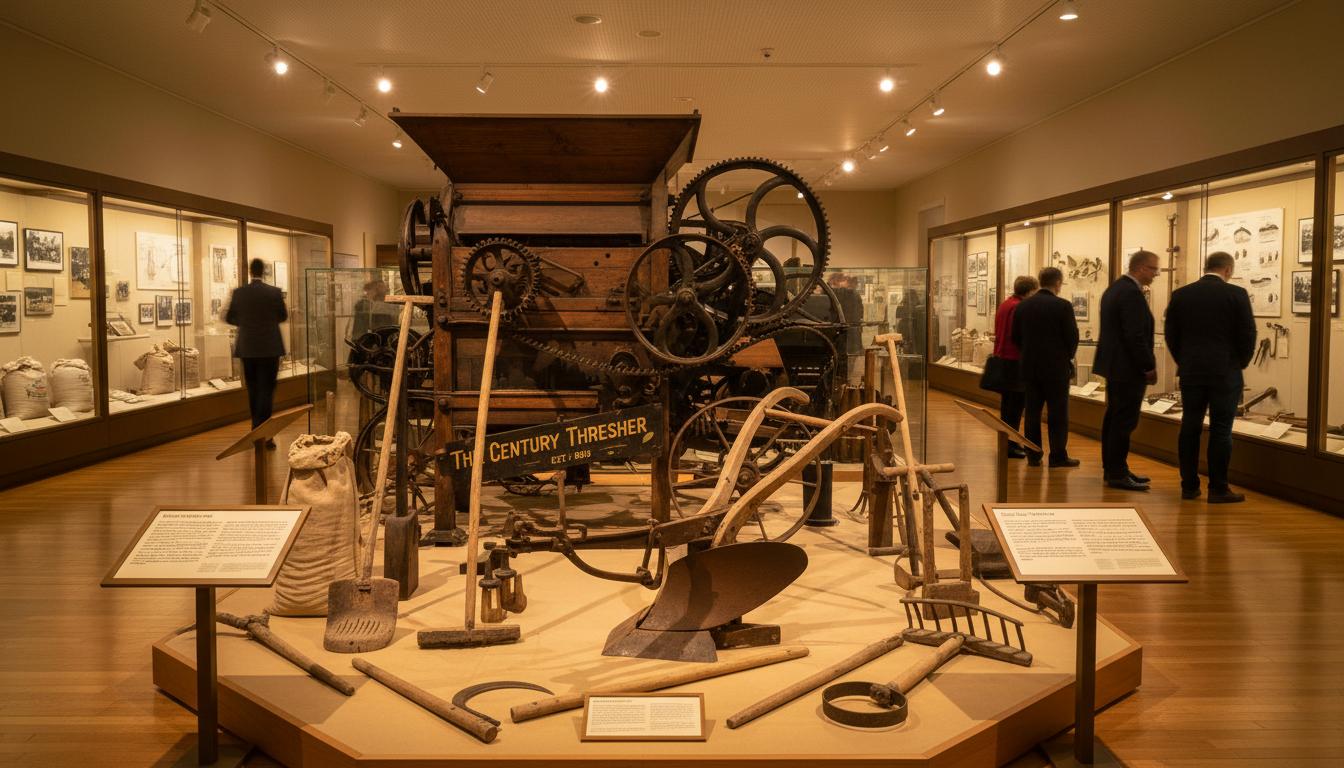
- Horse Treadmill from Raritan, NJ ca. 1830, attached to a Thresher built in Pottstown, PA ca. 1890. On small farms, the Horse Treadmill most commonly powered threshing machines. Treadmills came in different sizes allowing up to three horses to work at one time.
- Dump Rake, NJ 1900. This machine was used to rake cut hay into piles to be picked up and then loaded onto wagons and hauled to storage.
- "Hero" Corn Sheller, manufactured by Mountville Company, Mountville, PA. Patented April 5, 1892. This sheller was turned either by hand crank or a separate power source such as a stationary gasoline engine.
- Fodder Chopper, handmade, NJ ca. 1750. This machine was used in the late 1700's to early 1800's to cut corn stalks into short pieces for animal feed.
- Chain Belt Potato Grader, NJ early 1900's. This apparatus separated potatoes into three sizes: large ones stayed on the top, medium sized fell below and caught onto the second band, and small ones fell completely through.
- "Egomatic" Egg Grading Machine (electric), ca. 1940, made in Titusville, NJ by Otto Niederer Sons, Inc. and sold worldwide.
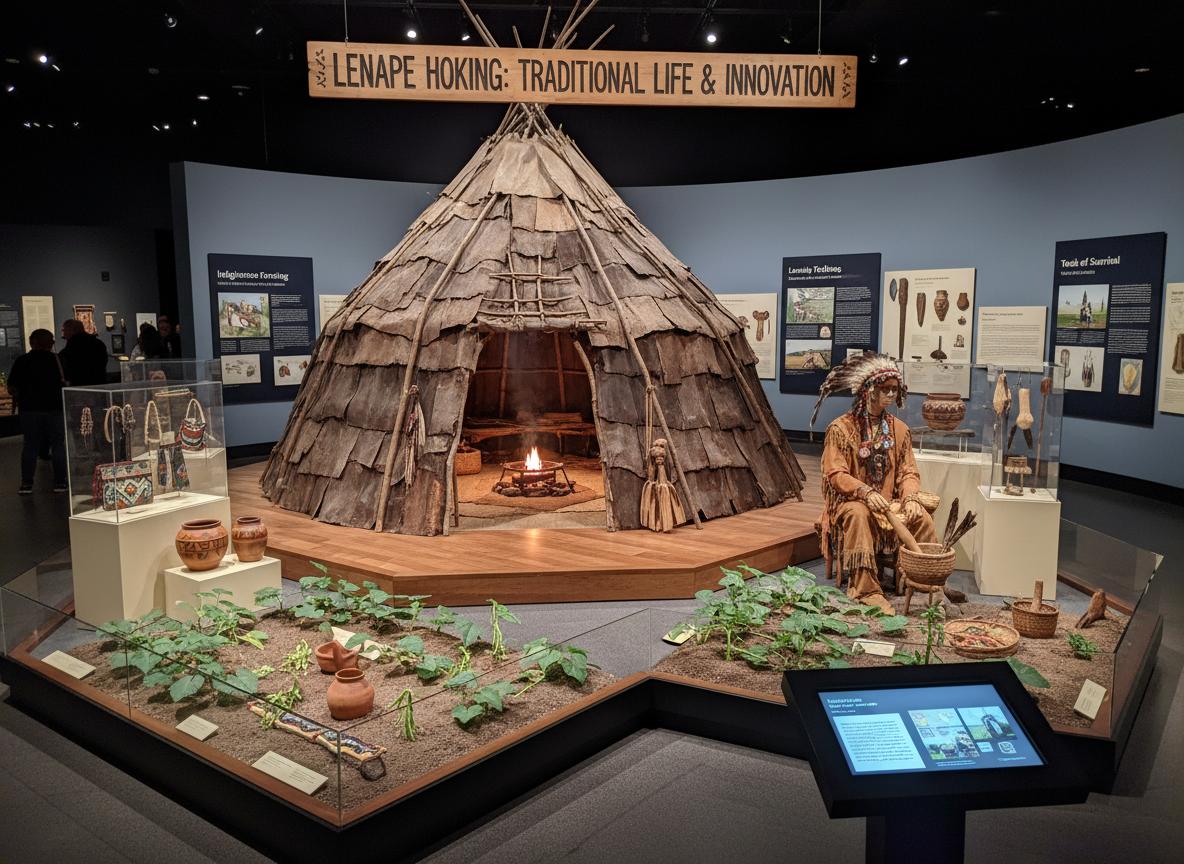
Lenape Indian Wigwam
Also located in this gallery is the Museum's near life-size replica of a Lenni Lenape Indian Wigwam along with a display of "gatherings" (natural materials utilized by the Lenape - New Jersey's first farmers) and other Indian artifacts.
Hall of Transportation and Early Electrification
Proceed next down the stairs to the first floor of the north wing into the Hall of Transportation and Early Electrification where every type of moving farm vehicle imaginable is represented, from a cutter sleigh to a "Planet Junior" farm tractor and a horse drawn surrey. Do not miss the:
- Restored DeHart Farm Wagon, ca. 1898
- Rumley Farm Tractor, ca. 1920. This tractor is powered by kerosene. For its time, it was a strong tractor that could pull heavy loads.
- Ford 9N Farm Tractor, built from 1939 to 1943. This originally all gray tractor introduced the 3-point power hitch system that revolutionized the industry.
- Meat Vendor's Sleigh, ca. 1900. The Eckhardt family, who butchered and sold meat in the Hammonton, NJ area, used this sleigh.
The Hall of Transportation and Early Electrification is also home to displays of early electrical appliances from the turn of the twentieth century including a washing machine, iron, butter churn, and other electric-powered conveniences.